

Glen and I have been married 31 years, and for most of them I would have told you we were fine. Then the kids moved out and fine turned out to mean we mostly talked about the garbage schedule. The same money argument kept coming back every few months, his work weeks got longer, and somewhere around year 24 I realized we had become two people who loved each other and no longer knew how to have a real conversation. That is why I picked up The Seven Principles for Making Marriage Work by John Gottman, and why I asked Glen to read it with me instead of reading it alone and summarizing it for him over dinner.
This review is what happened over the next four months: what we actually did with the book, which exercises worked at our kitchen table, which parts felt dated, and who I think should skip it entirely. I am not a therapist and I am not going to pretend otherwise. I am a retired middle-school librarian who has been married long enough to know that a book cannot save a marriage, but it can give two tired people a place to start.
The Quick Verdict
The most useful marriage book we have read together, not because it promises to fix anything but because it gives you a specific way to talk about the things you have been avoiding.
Amazon Check Today's Price →The book that got us talking again
Glen and I read this one cover to cover at the kitchen table. If you and your partner are tired of the same argument, this is the place we would start.
Amazon Check Today's Price on Amazon →How I've Used It
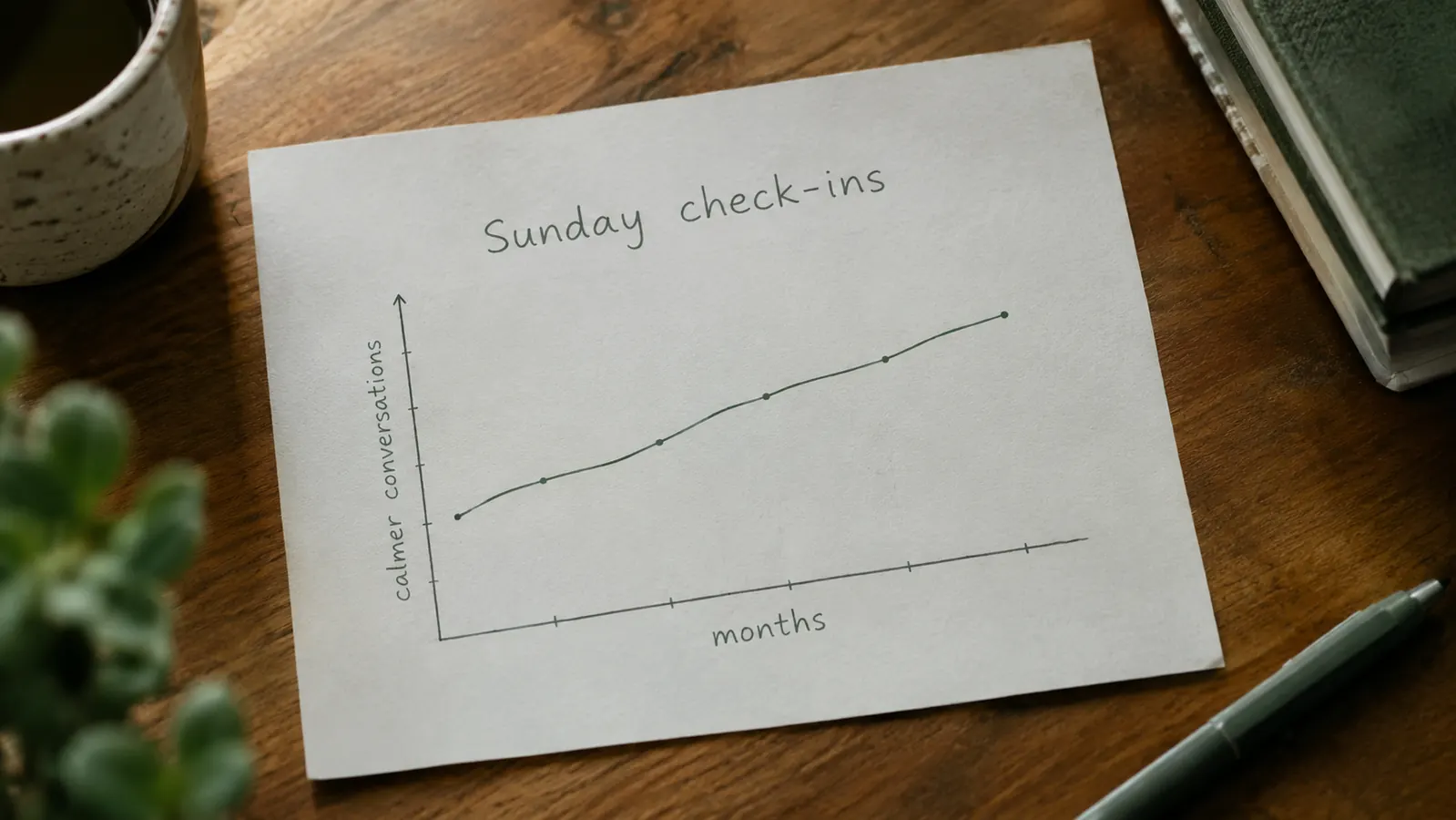
We did not read The Seven Principles like a novel. We read one chapter a week, on Sunday evenings, at the same kitchen table where we had been having our weekly check-in for years. I would read a section out loud, Glen would read the next, and then we would do the exercise at the end of the chapter. Some weeks the exercise took ten minutes. Some weeks it took an hour and we never finished the chapter. That was fine. The book tells you to go at your own pace, and for once we actually listened.
The first thing that surprised me was how much of the book is not about arguing. Gottman spends a lot of time on friendship, on turning toward each other in small moments, on the bids for connection that happen a hundred times a day. The famous research behind the book, the Love Lab, the ability to predict divorce with over 90 percent accuracy, is real and it is impressive. But what made the book work for us was simpler: it gave us a shared vocabulary. Instead of me saying you never listen, I could say that was a bid and you missed it. Instead of Glen going quiet, he could say I need a repair attempt. That alone changed more than any argument we have ever won.
I kept a notebook next to the book for the whole four months. I wrote down the exercises we did, the dates, and one line about how the conversation went. Looking back at that notebook now, the pattern is clear. The first few entries are tense. By the end, most entries just say good talk or Glen brought it up first. That is the honest measure of whether a marriage book works: not whether you agree with every page, but whether you talk to each other more than you did before.

What the Seven Principles Actually Are
The book is built around seven principles, and I will list them the way I would explain them to a friend, not the way a syllabus would. Strengthen your love map, which means actually knowing what is going on in your partner's world. Nurture fondness and admiration, which means noticing what they do right instead of cataloging what they do wrong. Turn toward each other instead of away, which is the bids idea I mentioned. Let your partner influence you, which was the hardest one for Glen and me. Solve solvable problems, which is most of the money and chores arguments. Overcome gridlock, which is the fights you keep having because they are actually about something deeper. And create shared meaning, which is the chapter we almost skipped and ended up loving the most.
The Gottman research behind the book is the reason I trusted it enough to suggest it to Glen. This is not one person's opinion about marriage. It is decades of observing hundreds of couples, watching how they talk, and then checking back years later to see who stayed together. When the book says contempt is the single best predictor of divorce, it is not being dramatic. It is reporting what the data showed. I found that grounding comforting. We were not being asked to follow a guru. We were being shown what couples who stay married actually do.
The book also includes the famous Gottman sound relationship house, which is a visual model of how the principles fit together. I will be honest: the diagram did not do much for me. Glen liked it. I am a words person and he is a structure person, so it worked for us as a couple even though it would not have worked for me alone. That is the thing about this book. Different chapters land for different people, and you do not have to love all of them to get something real out of the ones that do land.
What We Actually Did With the Exercises
The exercise that changed the most for us was the love map questions. The book has a list of open-ended questions about your partner's inner world, things like who their closest friends are right now, what their biggest worry is this month, what their current dream is. We had been married for three decades and I assumed I knew all of Glen's answers. I did not. His biggest worry was not what I thought it was. His current dream was not what I thought it was. We sat there for an hour and a half the first night, and I cried a little, not because anything was wrong but because I had stopped asking.
The second exercise that mattered was the one about turning toward bids. Gottman's research found that couples who stay married turn toward each other's bids for connection about 86 percent of the time, while couples who divorce turn toward them only about 33 percent of the time. The book asks you to notice the small moments: a comment about the news, a hand on the shoulder, a complaint about a coworker. For two weeks I tried to notice Glen's bids instead of answering them with a distracted mm-hmm. It sounds small. It was not small. By the end of the second week, Glen said to me, you seem like you are actually here. That was the whole point.
The exercise we struggled with was the one about accepting influence. The book asks the less receptive partner, often the husband in heterosexual marriages, to practice letting the other partner's opinion count in decisions. Glen is a land surveyor. He likes to solve problems on his own and he likes to be right. The first time I suggested a different approach to a decision about his mother's care, he got defensive. Then he read the chapter again and said, okay, I see what this is asking. It took him three weeks to actually do it, but when he did, it changed the texture of our arguments. I was not fighting to be heard anymore. I was being heard.
The first night we did the love map questions, I cried a little, not because anything was wrong but because I had stopped asking.
What Felt Dated and What I'd Change
I want to be honest about the parts that did not work for us. The book was first published in 1999 and revised in 2015, and it shows in places. The examples are overwhelmingly heterosexual and mostly from a certain kind of 1990s American marriage. Glen and I fit that example, so it did not exclude us, but I noticed it, and I would not hand this book to a same-sex couple or a couple from a very different cultural background without warning them that they will have to translate a lot of it.
Some of the exercises also assume a level of emotional vocabulary that not everyone has. The chapter on gridlock asks you to identify the dreams behind your position in a conflict, which is a genuinely powerful idea, but the book does not always give you enough help getting there. We got stuck on that chapter for two weeks. What finally helped was not the book but a question I asked Glen directly: what would you be afraid of losing if you gave in on this? That question came from the book's ideas, but the book itself did not hand it to us.
I also think the book undersells how much practice the skills take. Gottman says the principles are skills, not personality traits, and I believe that. But reading about a repair attempt is easy. Remembering to make one in the middle of a real argument is hard. We had to fail at it several times before it became natural. If you read this book and expect the next argument to go differently without practice, you will be disappointed. The book is a gym membership, not a personal trainer.
How It Compares to Other Books We've Tried
Glen and I have worked through several relationship books over the years, and The Seven Principles is the one we keep coming back to. The Five Love Languages was a good starting point for us, but it is mostly about one idea, and once you know the idea you are done. This book has more depth and more room to grow. We have also tried books that are essentially lists of communication scripts, and those felt performative. We would say the scripted sentence and then feel worse because it did not sound like us. The Gottman book is less scripted. It gives you a framework and asks you to do the talking.
The other thing that sets it apart is the research. Most marriage books are one person's opinion backed up by a few anecdotes. This one is a research summary with exercises attached. That does not make it infallible. Research on couples is messy and the book simplifies a lot. But it meant that when Glen and I disagreed with a claim, we could talk about the evidence instead of just trading opinions. That is a much better argument to have.
What I Liked
- Built on decades of real research on hundreds of couples, not one person's opinion
- Gives you a shared vocabulary for talking about your marriage
- The exercises are specific and doable at the kitchen table
- Works whether you are in crisis or just feeling distant
- Glen and I both found something useful, which has never happened before
Where It Falls Short
- The examples feel dated and very 1990s heterosexual
- Some exercises assume more emotional vocabulary than they teach
- The gridlock chapter is powerful but hard to work through alone
- It is a lot of reading, and it only works if both partners actually do it
Who This Is For
This book is for couples who are not in crisis but have drifted. If you and your partner mostly talk about logistics, if the same argument keeps coming back, if you love each other but feel more like roommates than partners, this is the book for you. It is also for couples who are in a rough patch and want a structured way to start talking. It is not a substitute for therapy, and Gottman does not claim it is. But it can be the thing you do while you are waiting for a therapist, or the thing that convinces you to find one.
It is also for one specific kind of person: the partner who does not think they need a marriage book. Glen was that person. He agreed to read it because I asked, and he was skeptical for the first two chapters. By the fourth chapter he was the one suggesting we do the exercises. The research angle is what got him. He trusts data more than he trusts feelings, and this book is full of data. If your partner is a skeptic, the Gottman research might be the door in.
Who Should Skip It
Skip this book if you are in an abusive relationship. No book about communication helps when the problem is not communication, and Gottman himself says the book is not for couples where there is abuse, safety concerns, or serious untreated mental illness. If that is your situation, please talk to a licensed professional or call a domestic violence hotline. A book cannot do that work.
Skip it also if you are not willing to do the exercises. Reading this book without doing the exercises is like reading a cookbook and then saying you tried cooking. You will get some interesting ideas and nothing will change. And skip it if you are looking for a quick fix or a list of magic sentences. This book asks for time, patience, and a partner who is willing to show up. If you have those three things, it can help. If you do not, no book can.
Start with one chapter this Sunday
Glen and I read one chapter a week and it took us four months. You do not have to finish it in a weekend. You just have to start.
Amazon Check Today's Price on Amazon →