

For years, Glen and I did the thing most couples do: we said 'we need to talk,' sat down, and then talked in circles. Around year 24, with the kids out of the house, we realized we mostly talked about logistics, and the same argument about money and his long work weeks kept coming back. A friend loaned us a copy of Love More, Fight Less by Gina Senarighi, and the first Sunday we sat down with it, something different happened. Not because we suddenly knew how to communicate. Because we finally had a structure. Here are ten reasons a couples communication workbook works better than another talk.
Glen was skeptical at first. A land surveyor, he likes problems he can measure, and 'let's work through a book about feelings' sounded like my project, not his. But the workbook's structure won him over: short chapters, clear questions, and a page to write on. No lecturing. Just two people answering the same question. Here is what I learned from watching the two of us do this for months.
Skip the next circular talk. Start with the workbook instead.
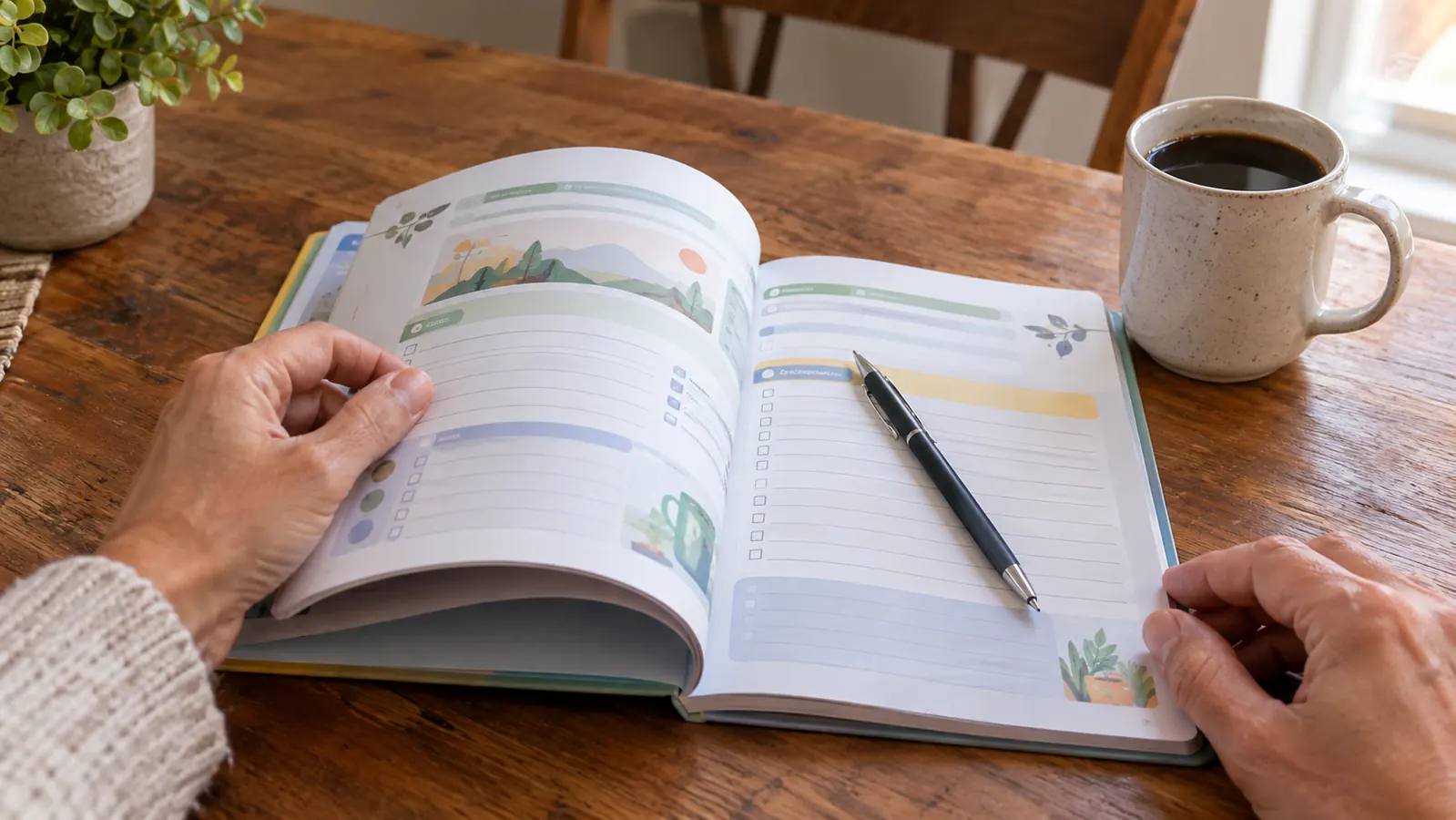
Love More, Fight Less is the couples communication workbook that got us out of the same argument and into an actual conversation. Glen and I have worked through it slowly, one chapter a Sunday, and it is the closest thing we have found to a referee that never gets tired.
Amazon Check Today's Price on Amazon →It Ends the 'We Need to Talk' Ambush
The worst conversations start cold. Someone says 'we need to talk' and the other person spends the next hour braced for bad news. A workbook changes the setup entirely. It is a scheduled, shared task with a beginning and an end. Glen and I do ours Sunday evening at the kitchen table, and because we both agreed to the routine, nobody feels cornered. The book does the asking. We just show up.
Amazon See how the workbook structures the conversation on Amazon →
Both People Get Equal Floor Time
In a live argument, the louder person wins, or the one who is better with words, or the one who is more tired. A workbook hands out the floor evenly. You both answer the same question in writing, then you read your answers aloud. Same number of questions, same number of words, same turn. The first time Glen read his answer without me interrupting, I heard something he had been trying to tell me for months.
Amazon Read the prompts that level the playing field on Amazon →
Writing Slows Your Brain Down
When I talk, I say the first thing that comes to mind, and the first thing is usually the unhelpful thing. Writing forces me to finish a thought before it leaves my mouth. The workbook's pages made me sit with a question instead of lunging at it. Glen noticed the difference before I did. I got quieter in the moment and clearer five minutes later.
It Names the Real Issue Under the Argument
Our money fights were never about the spreadsheet. They were about what the numbers meant to each of us, and we could not say that out loud. The prompts in Love More, Fight Less pushed us past the surface complaint, 'you spend too much,' and toward the actual feeling, which for me was fear when the account dipped. Naming that feeling did not fix the budget. It fixed the fight.
Amazon See how the workbook gets past surface fights on Amazon →
It Makes the Other Person's Answer Unmissable
In a regular talk, I am often just waiting for my turn to speak. That is the honest truth. When Glen reads his written answer from the workbook, there is no turn to wait for, so I actually hear him. A few times he said something I had missed for years, not because he had hidden it, but because I had been too busy preparing my reply to listen.

It Gives You a Script for the Hard Sentences
'I feel scared when the balance drops, because it reminds me of my parents' money fights.' I could not have said that sentence cold. The workbook gives you sentence stems and sentence starters, and they feel stiff at first, like learning a foreign language. But practicing them on paper made them usable at the table. By the third Sunday, the stiff sentences started sounding like us.
It Builds a Habit, Not a One-Time Heart-to-Heart
One good talk fades by Tuesday. That is why the dramatic conversation is overrated and the weekly check-in is not. We are 31 years in, and the reason we are still here is the weekly part. The workbook gave us a reason to sit down even when nothing was wrong, which turned out to be exactly when the important things got said.
It Leaves a Record You Can Look Back On
We have notebooks full of check-in pages going back years. When we hit a rough patch, I flip back to a hard season and read what we wrote then. It reminds me that the rough patch ended, because I can see the page where we wrote our way out of it. A talk you both remember differently gives you none of that.
It Gives the Doer in the Marriage a Job
Glen is a land surveyor. He fixes things for a living, and sitting across from me in a 'deep talk' made him restless. The workbook gave him a pen and a page and a task, and he relaxed. I learned that my husband communicates better with his hands busy and a clear job in front of him. That is not a flaw. It is just how he is built.
It Keeps a Third Voice in the Room
I am not a therapist, and I want to be honest about that. A workbook is not therapy. But a good one is written by someone trained, and her questions do what a mediator does: they keep two people from talking over each other. Gina Senarighi wrote Love More, Fight Less as a counselor, and the book's structure is the calm voice in the room when ours get loud.
What I'd Skip
I would skip this workbook if you are looking for a magic fix for a marriage in real trouble. If there is abuse, safety is the only topic, and please talk to a licensed professional, not a book. And if one of you refuses to write a single word, the workbook will not save you; the writing is the whole point. For us it worked because we both showed up with a pen. For a couple where one person will not engage, no book fixes that, and Gina Senarighi would tell you the same.
The prompts pushed us past 'you spend too much' and toward 'I feel scared when the account dips.' Naming that feeling fixed the fight, not the budget.
Your next Sunday evening could be different.
Glen and I are proof that a weekly check-in with Love More, Fight Less by Gina Senarighi can turn the same old argument into an actual conversation. Start with one chapter and one honest answer each. You do not need to be good at talking. You just need to show up with a pen.
Amazon Check Today's Price on Amazon →