
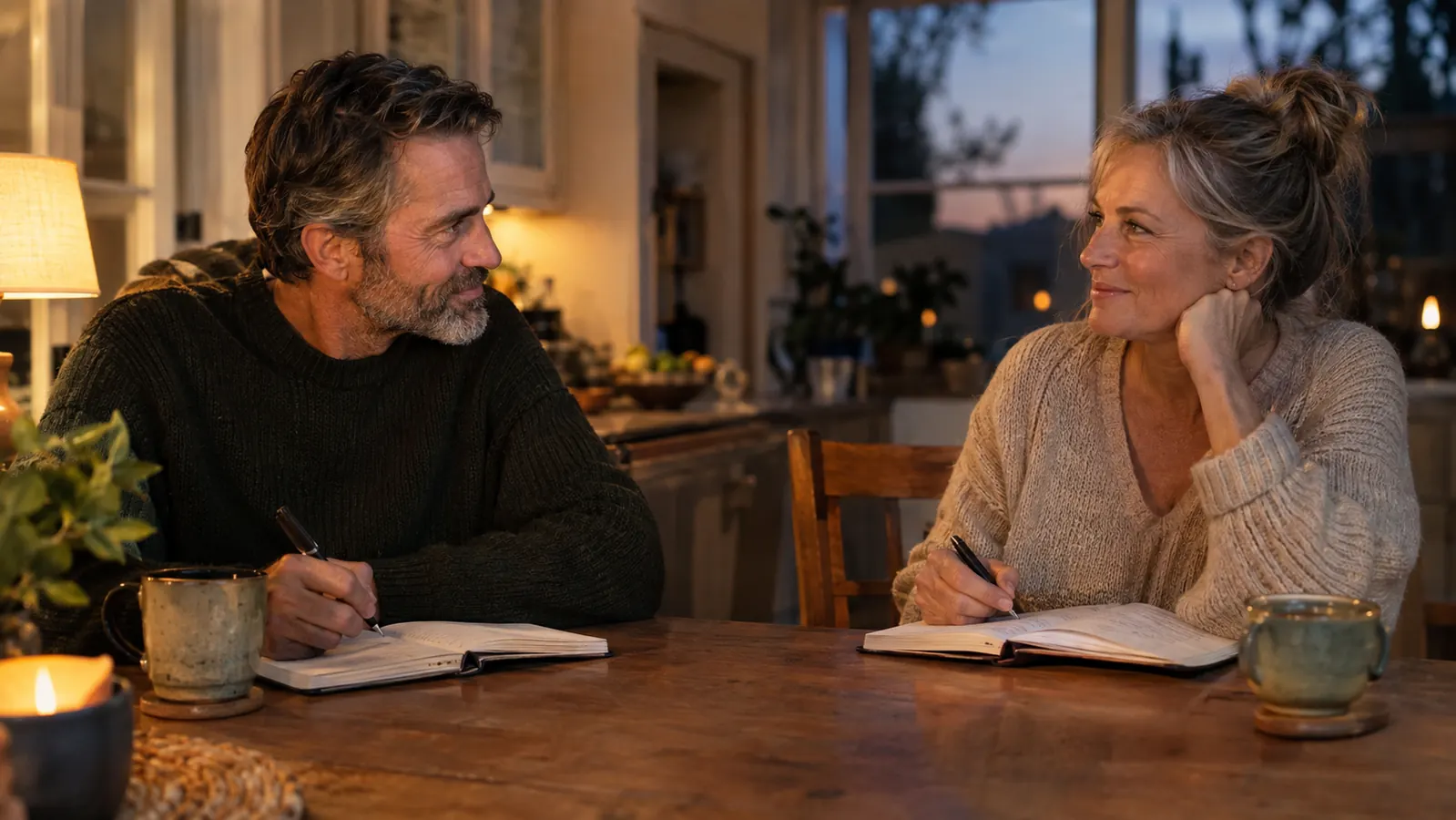
Glen and I did not stop talking when the kids moved out. We stopped saying anything that mattered. By year 24 of our marriage, a typical evening was me asking about his day, him saying it was fine, and both of us pretending the same argument about money and his long work weeks had not been sitting between us for a decade. We loved each other. We just had nothing new to say. Then a friend handed us a question-a-day journal from Alicia Muñoz, and the first prompt got us talking for an hour past our usual bedtime.
One question a day is the smallest habit that brought real conversations back to our table
A Year of Us gives you 365 prompts, one per page, with room for both of you to answer. Glen and I started with five minutes a night and usually stayed for twenty. It is the easiest way we have found to make talking a daily habit instead of a weekly chore.
Amazon Check Today's Price on Amazon →It removes the 'what do we talk about' pressure
The hardest part of a conversation is starting it. A prompt like 'What made you laugh today?' gives you a door to walk through. You stop staring at each other trying to invent a topic, and you just answer the question. The journal from Alicia Muñoz does the thinking for you, which is exactly what a tired brain needs at 9 p.m. On our first night, Glen read the question, laughed, and told me about a surveyor's joke that had cracked him up on a job site near Redmond. I had not heard him laugh like that over dinner in months.
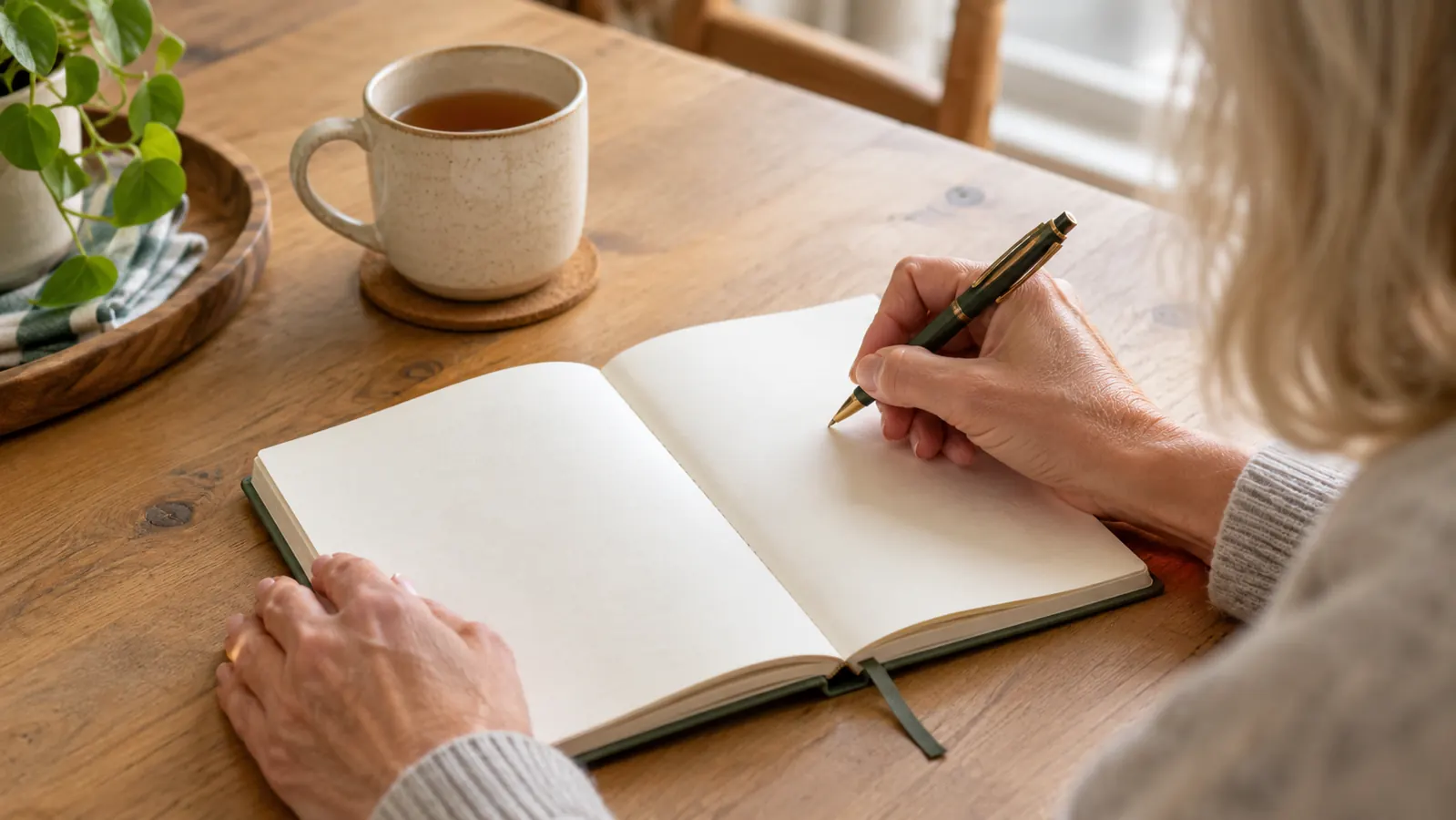
Five minutes is a small enough promise to keep
Glen and I have started a dozen 'let's talk more' plans and abandoned all of them by February. A single question with a few lines of space each is not a project. It is one page. On our worst nights we wrote two sentences each and still felt like we had checked in with each other. One Tuesday in March he came home at 8:40 after a fourteen-hour day, and I almost skipped the journal. We did one question in bed, him propped against the headboard, me with my reading glasses on. It took four minutes. It was the most we had said to each other all week.
It surfaces the small stuff before it becomes big stuff
The best questions are the ones that sound too simple to matter. 'What is one thing you are looking forward to this week?' sounds like small talk. But when Glen answered 'sleeping in on Saturday' and I heard how exhausted he was, we finally talked about his workload instead of just resenting it. The journal catches the little things early. That Saturday he slept until 9:30, and I made pancakes instead of waking him with a list of chores. A month earlier, I would have been annoyed. Instead, I understood.
It gives the quiet spouse a turn to talk
I am the talker in our marriage. Left to myself, I would fill every silence. The journal gives Glen a question and a turn, and it asks me to listen. Some of the most honest things he has said to me in years came out because a prompt asked him directly and I sat still long enough to hear the answer. One night the question was about a moment he felt proud of me. He wrote about the time I stood up to a parent at the school library who was yelling at a student worker. I had forgotten that afternoon. He had carried it for six years.
It makes you curious about the person you already know
After 31 years, I thought I knew every Glen story. Then a prompt asked about his favorite memory from the year we met, and he told me a version of that summer I had never heard. He described the exact spot on the Deschutes River where he had gone to think before asking me out, and why he almost turned around. The journal does not just remind you of shared history. It makes you curious about the parts you missed.

It builds a record of your year together
By December, the journal is a small archive of your marriage: what made you laugh in March, what you worried about in July, what you planned for the holidays. Reading back through our first year felt like watching a time-lapse of us learning to talk again. That record is worth more than any single conversation. I found the page from the night we decided to take a weekend trip to the coast, and the page from the morning Glen's crew got the contract for the new county road. Those two pages are our whole year in miniature.
It works on the nights you are both exhausted
The nights that used to end in silence are exactly when this journal earns its place. When Glen came home late and I was drained from a long day, a one-line answer was still possible. We learned that a tired 'this, because of that' is better than no conversation at all. The bar is low on purpose, and that is the point. One night in November I wrote 'tired' for the feeling question and Glen wrote 'same.' Then we both laughed, and he told me about the crew's Thanksgiving potluck. Two words got us started.
It gives hard topics a gentler doorway
We did not fix our money arguments with a journal. But a prompt about 'what you are most worried about right now' let Glen say 'I am scared I am failing you by working so much' in a way that did not feel like an accusation. The journal does not replace hard conversations. It makes them possible to start. We still had the hard talk, but we had it sitting at the kitchen table with the book between us, not in the car on the way to his mother's house like the last time.
It is a daily reminder that you are on the same team
Most of our arguments were not us against each other. They were us against exhaustion, money stress, and a calendar with no room for us. Answering a question together every night is a small ritual that says 'we are still doing this together.' That reminder matters more than any single answer. On the nights when the same old worry about the budget came up, the journal was the thing that reminded us we were both on the same side of the table, not across from each other.
It turns a habit into a memory you will keep
The journal by Alicia Muñoz gave us a year of evenings we would otherwise have spent on our phones. When I look back, I do not remember every answer. I remember the feeling of Glen reaching for the book before I had to ask. That is the real reason we still open it, even now that the habit is ours. Last week he pulled it out on a Sunday night without a word, opened to the next page, and handed me the pen. That small gesture is the whole review.
What I'd Skip
If you are hoping a journal will fix a marriage that is in serious trouble, skip it. A book of prompts is not counseling. If you are dealing with abuse, safety concerns, or real mental health struggles, please talk to a licensed professional. Glen and I used this journal because our marriage was basically good and just needed more talking. It is a tool for connection, not a repair kit.
A tired 'this, because of that' is better than no conversation at all. The bar is low on purpose, and that is the point.
The best time to start was last January. The second best time is tonight.
You do not need a special occasion or a big talk planned. You need one question, two pens, and five minutes. A Year of Us by Alicia Muñoz has all 365 questions ready, and the first one takes less time than scrolling your phone.
Amazon Check Today's Price on Amazon →